Janaaism
“A philosophy of infinite ascension on the path of truth—guiding conscious beings beyond self-inquiry into joyful transcendence.”
“A philosophy of infinite ascension on the path of truth—guiding conscious beings beyond self-inquiry into joyful transcendence.”
Originally came from the Sanskrit word jñāna (ज्ञान, [ˈdʑɲaːnɐ]) , jnana, is used to denote right knowledge, true knowledge or higher knowledge. It is derived from the root word, "jna," meaning to know, learn or become acquainted with. Jñāna, sometimes transcribed as gyaan, means "knowledge" in Sanskrit. The root jñā- is cognate to English know, as well as to the Greek γνώ- (as in γνῶσις gnosis).
“Janaa (জানা)” as a Bengali word means:
However, its deeper implication goes beyond intellectual understanding. The concept of jñāna centers on a cognitive realization that is directly recognized in experience — a form of knowledge inseparable from the totality of being. It represents the awareness that emerges from direct encounter with reality itself, particularly the ultimate or divine reality.
The root ज्ञा- jñā- is cognate to Slavic znati, English know, as well as to the Greek γνώ- (as in γνῶσις gnosis) and Lithuanian žinoti. Its antonym is अज्ञान ajñāna "ignorance". Here, Janaaism is the philosophy of self-awakening and transformation, a guiding way of life.and Janaalogy is the analytical, structural, and research-based understanding of that philosophy, the academic study of the doctrine.
but rather — a framework for conscious self-evolution and transcendence.
where knowing oneself means
preparing to transcend oneself,
and personal excellence means
contributing to the whole of existence
“The Journey from Within to the Infinite Beyond.”
Janaaism is a philosophy of embracing a meaningful, joyful, and truthful life. The word “Janaa” is a Bengali term derived from Sanskrit, meaning “to know” or “to be aware.” The philosophy of Janaaism teaches self-discovery through self-awareness by moving from the unknown to the known, guided by the principle of Sa-Nimitta—the understanding of one’s life-purpose and reason for existence. Through self-discovery, a person becomes capable of knowing their true identity, what they can excel in, and where they can find joy. In what one excels at and finds joy, excellence is most easily achieved. According to Janaaism, one must discover one’s Sa-Nimitta, determine one’s work, and then dedicate oneself to it. After identifying one’s strengths and weaknesses, one must challenge oneself toward self-transcendence. Self-transcendence is the process of surpassing one’s limitations through challenge. Through self-transcendence, a person attains self-surpassing (Atto-Uttirnnata). Gaining mastery over one’s body, mind, emotions, and inner world and not remaining confined even to these, but moving beyond them, is self-surpassing.
Janaaism advocates embracing the path of excellence by continuously challenging one’s capacity through self-knowledge and then surpassing that very level. By ensuring the intention of fulfillment and attaining self-surpassing, a person can enjoy peace, joy, meaningfulness, and well-being. After this inner transformation, Janaaism directs one to unconditionally show that light to others as well. Through selfless effort for others, life becomes meaningful. And this entire process becomes possible through Vajramati, the indestructible wisdom. Such a matured life becomes a truly meaningful life, worthy of ascending on the path of Vistara.
According to Janaaism, we have all come into this world to experience in our own form, to borrow various elements, to ennoble those experiences, and then to depart. Nothing is truly our own possession. A meaningful life is like a flower. From a seed, taking nourishment from the soil, air from nature, and light, we bloom in a garden, spread fragrance, dissolve into infinity, and then fall away. At times harsh winds, insect attacks, or the dryness of the soil may take away our freshness, yet even then, we must not give up. We must remain joyful, strong, indomitable, and unconquerable. Not surrender to falsehood, but rather consciously embrace truth and the path of light. Prepare yourself to savor experience and to spread fragrance in the lives of others. Finally, we shall fall in such a place where, merging with the soil, we will offer ourselves back, so that we may ensure fertility for the coming of the next flowers, making their arrival more gentle, peaceful, and beautiful.
The sense organs serve as the primary instruments for acquiring knowledge of the external world. In ancient Indian thought, this knowledge, Jñāna (ज्ञान) in Sanskrit, was not limited to information or learning, but referred to true knowledge, right understanding, or higher realization. The word Jñāna originates from the root “jñā”, meaning to know, to learn, or to become aware of. It represents not only cognitive awareness but also the direct experience of truth, knowledge that is inseparable from being itself. In the Bengali linguistic evolution, the same root manifests as “Janaa (জানা)”, meaning to know, to realize, or to become conscious of something. In Janaaism, this simple yet profound term becomes the foundation of an entire philosophy of self-awakening.
Janaaism thus redefines knowledge as an experiential awakening, an inner event of consciousness rather than an external accumulation of facts. To know in the Janaaism sense is to see oneself without distortion, to awaken to the total reality of life through direct perception, discipline, and awareness.
Here, Janaa is not merely intellectual comprehension; it is living knowledge — the kind that transforms the knower. It bridges sensory perception and spiritual realization, uniting the outer act of learning with the inner act of becoming. In this synthesis, the ancient pursuit of Jñāna evolves into a modern path of holistic self-realization: Janaaism : the way of knowing, empowering, serving, and transcending. Discover. Know. Rise to Excellence. Serve. Transcend. Merge.The journey from awakening the self to merging with the Infinite.

The Living Path of Awareness, Purpose, and Transcendence —
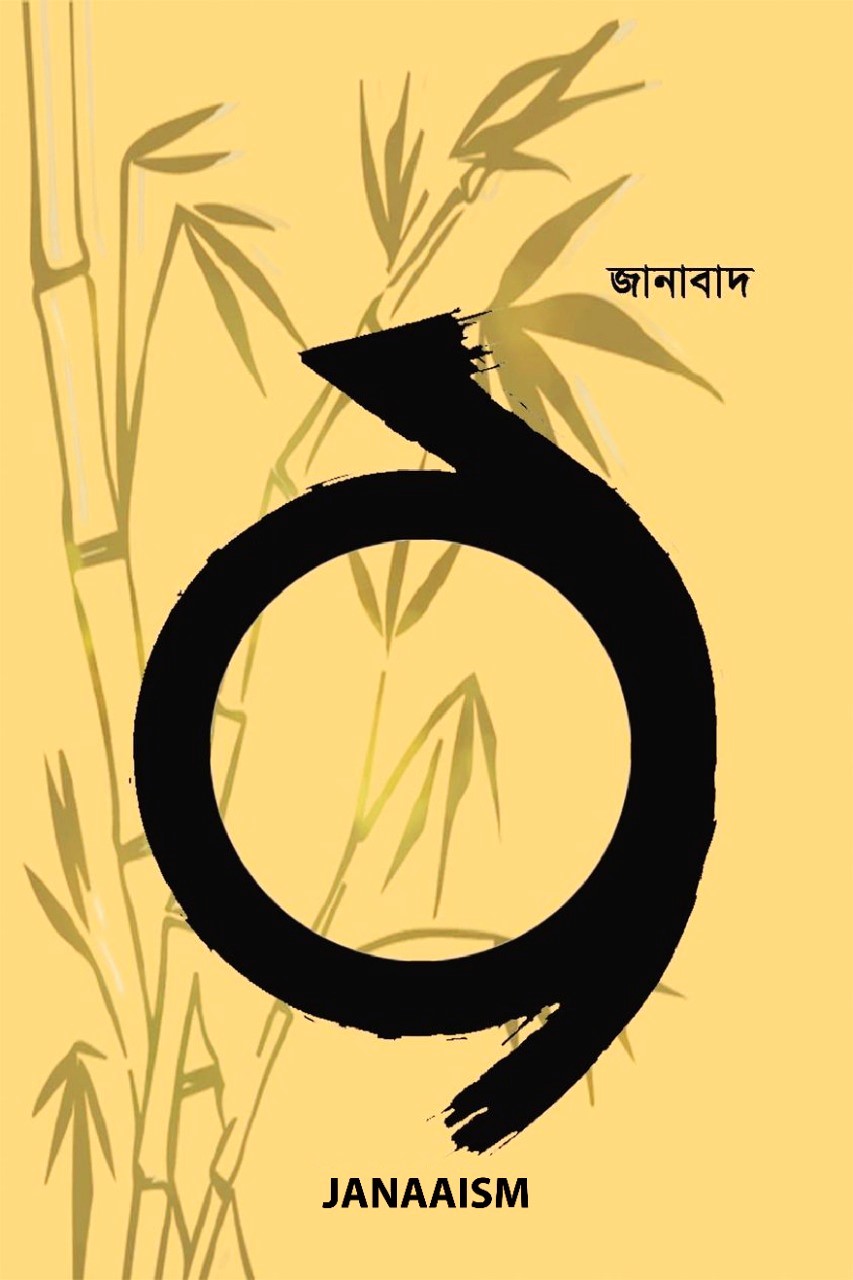
These five principles form the living, universal foundation of Janaaism — a way to awaken, live purposefully, rise with excellence, serve with compassion, and finally merge with the Infinite. They represent the five fingers of the awakened hand, guiding humanity toward self-mastery and cosmic unity. These work as the universal foundation, what we might call the “living philosophy” of Janaaism.
A Transformative Path from Self-Knowledge to Cosmic Unity. These are deeper, more advanced stages of inner transformation — the structured journey of awakening:
These work as the inner discipline / spiritual roadmap, for those who wish to go beyond basic principles into systematic awakening.this twofold framework makes Janaaism both universally accessible and philosophically profound. These work as the universal foundation, what we might call the “living philosophy” of Janaaism. .Janaa now stands as the core emblematic principle , giving identity, clarity, and continuity.
The five principles become both philosophically sequential and linguistically complete, making them perfect for use in education, rituals, branding, and institutional presentation (like the World Janaa Foundation).
Together, they form the outer hand (Principles) and the inner ladder (Steps) of Janaaism, a complete philosophy for living with meaning, mastery, and transcendence.
So: Principles = Universal for all. Steps = Deeper for practitioners and seekers.
“Peace in Janaaism is not produced by effort;
it emerges naturally when awareness dissolves resistance.”
Janaaism is founded on the understanding that true human fulfillment does not arise from domination, accumulation, or constant striving, but from knowing oneself clearly and living in harmony with that knowing. In an age of acceleration, conflict, and inner fragmentation, Janaaism affirms that peace is not a luxury, nor an escape from life—it is a fundamental condition of a balanced consciousness.
Since Janaaism (জানাবাদ) centers on knowing oneself (Janaa/জানা) and the continuous unfolding journey from illusion to realization and beyond, the line should reflect limitless seeking and incompleteness of knowledge.
Janaaism most is: "All that you know is but a fraction of what remains to be known." Because it aligns with the Janaaism view that self-knowledge and truth are never complete; there is always a further layer to uncover in the Ōsim Britto (অসীম বৃত্ত), the infinite circle of life.
তাই দার্শনিক ও জ্ঞানতত্ত্বে বলা হয়,
“জানার সীমারেখা মেনে না-জানাকে গ্রহণ করাই সত্যিকারের প্রজ্ঞা।”
Knowing মানে – সচেতনভাবে বুঝতে চাওয়া, জ্ঞান অর্জন, স্ব-অন্বেষণ, উপলব্ধি। Not Knowing মানে – অজানা গ্রহণ করা, বিস্ময়, সীমাবদ্ধতা মেনে নেওয়া, মনের উন্মুক্ততা। এই দুইটি আসলে একে অপরের প্রতিদ্বন্দ্বী নয়, বরং পরিপূরক। জ্ঞান খুঁজতে খুঁজতে মানুষ "অজানার" দরজায় পৌঁছে যায়, আর অজানাকে মেনে নিতে নিতে নতুন "জ্ঞান" জন্ম নেয়।
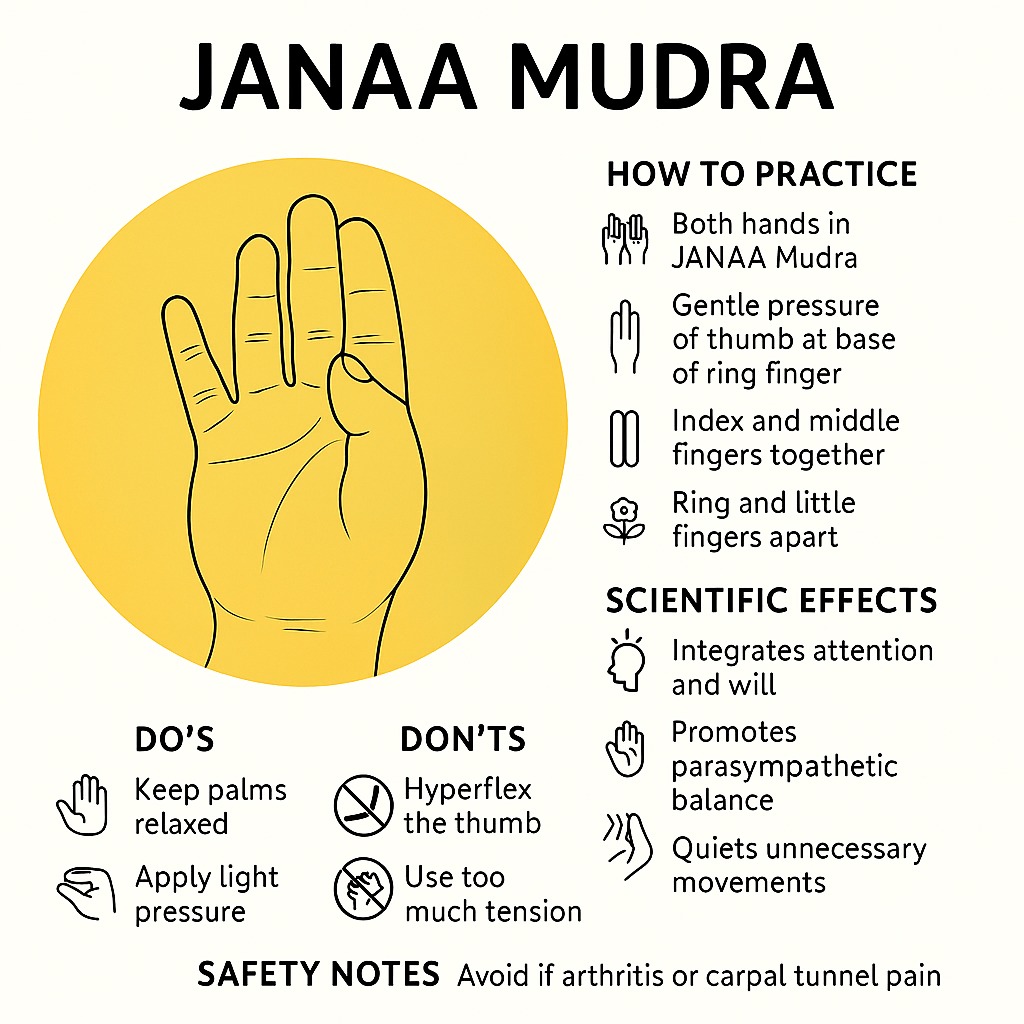
Nitto means finding oneself in the reality of existence. Britto refers to challenging one's own capabilities and attaining the best possible form through the pursuit of excellence, while the empty space in the center of the circle in the Britto symbolizes the void or emptiness.
Udyato means rising above personal interests and guiding life onto the path of enlightenment or leading it forward. Anitto signifies the realization of life's impermanence or transience, represented through the symbolic curve in the opposite direction. Shirso is the final divine stage, attained through self-transcendence.
The symbol of Janaaism philosophy consists of five main elements:
1) NITTO (Eternal Existence): The realization of one’s true self in tangible reality.
2) BRITTO (The Circle): Challenging one’s own capabilities to attain excellence and embodying the highest potential.
3) UDYATO (Aspiration): Rising above personal interests and guiding life towards enlightenment.
4) ONITTO (Impermanence): The transient nature of life.
5) SHIRSO (Elevation): The ultimate divine stage attained through self-transcendence.
This symbol reflects the concept of OSIM BRITTO (The Infinite Circle) in Janaaism philosophy, where life begins from eternity (NITTO), evolves through the circle (BRITTO), aspires towards higher realization (UDYATO), comes to the awareness of impermanence (ONITTO), and ultimately reaches fulfilment (SHIRSO).
“Janaaism is From Knowing the Self to Becoming the Infinite.”
(“নিজেকে জানার মধ্য দিয়ে অসীমের সঙ্গে একাত্ম হওয়ার যাত্রা”)
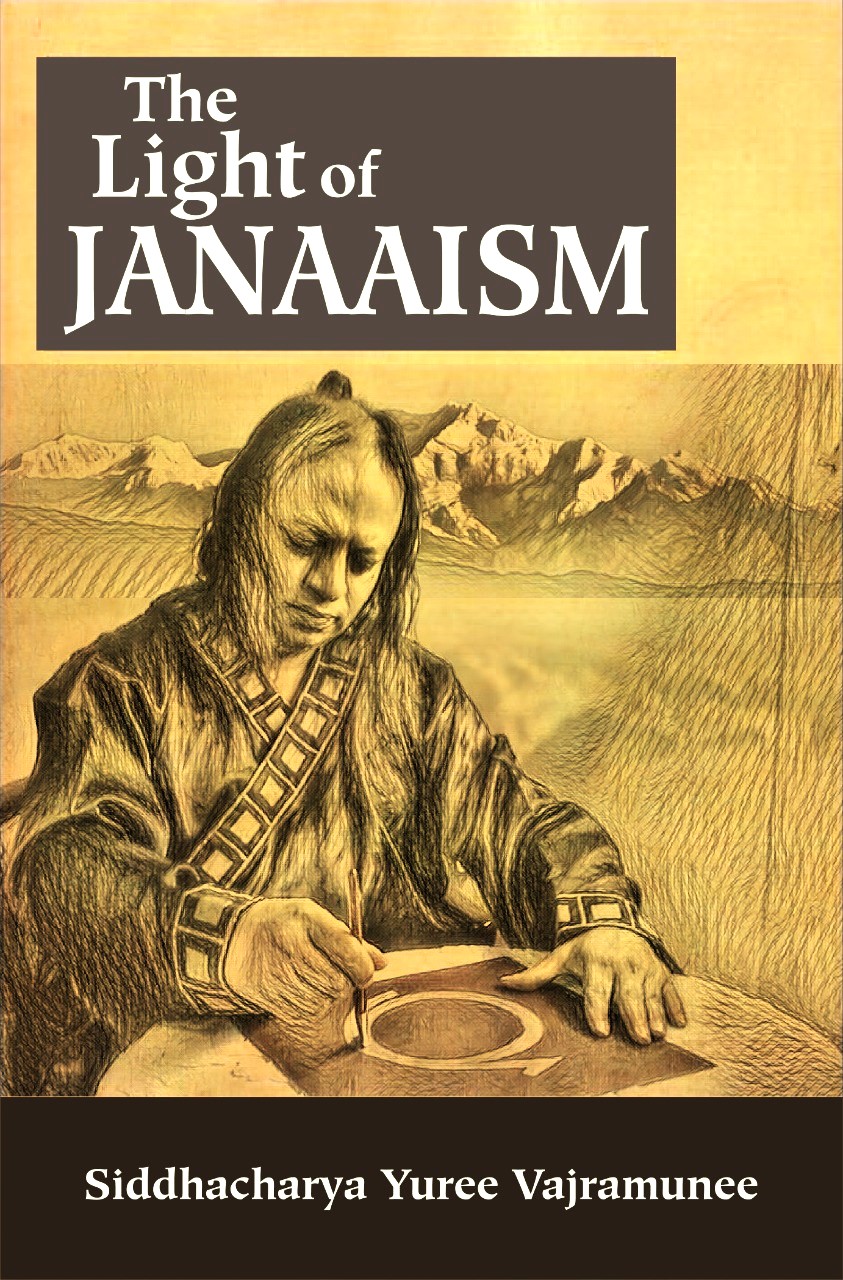
Janaaism is founded by Siddhacharya Yuree Vajramunee. Janaaism is a philosophical and human development framework, not a religion or medical system. All concepts, terminology, and structures are protected intellectual property. Unauthorized copying, distortion, teaching, or commercial use is strictly prohibited.